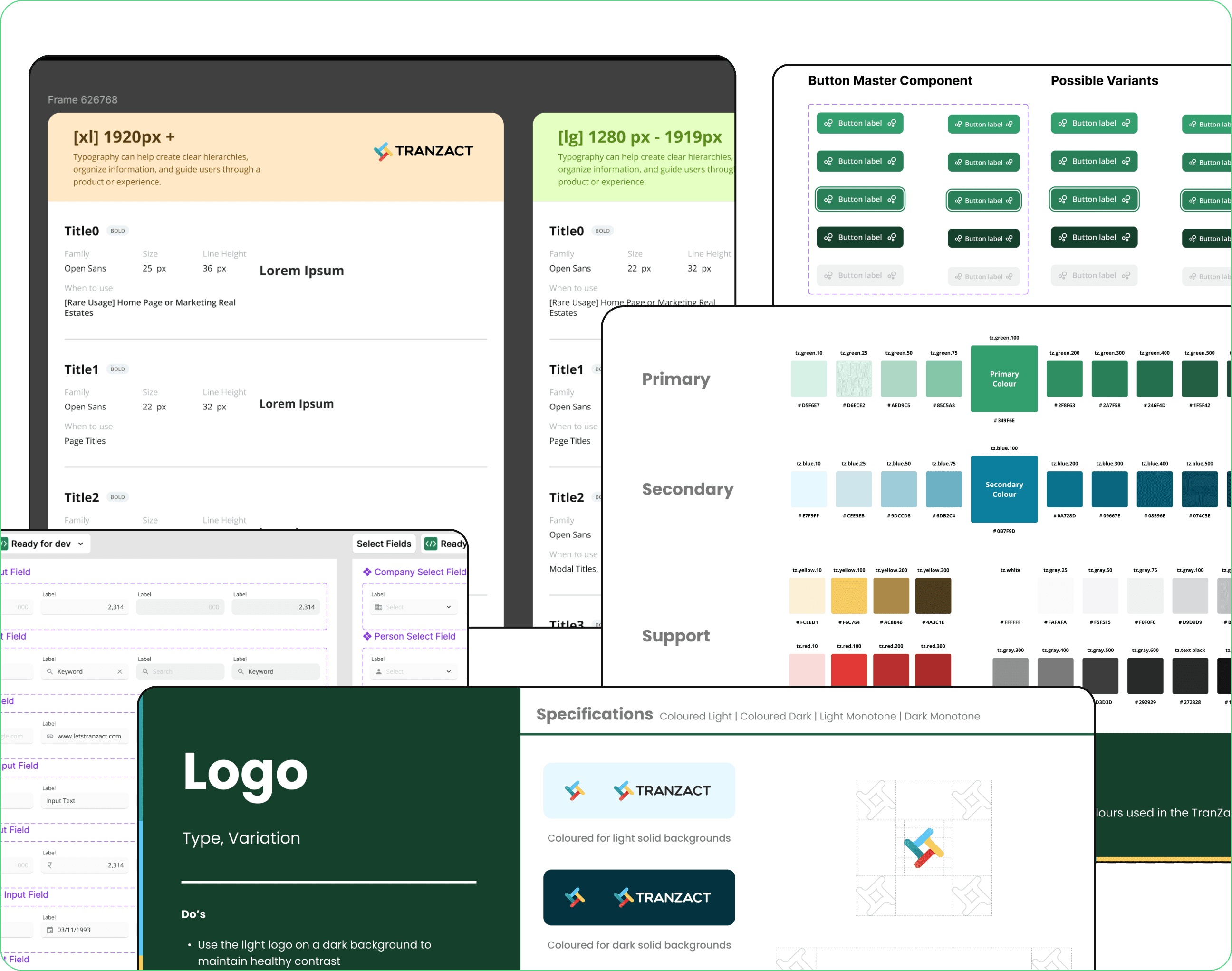
Showcase
~ Weaving an Unforgettable Performance ~
Stickiness and Growth (2/2): Scaling with Design System
Problems Faced Pre-Design System
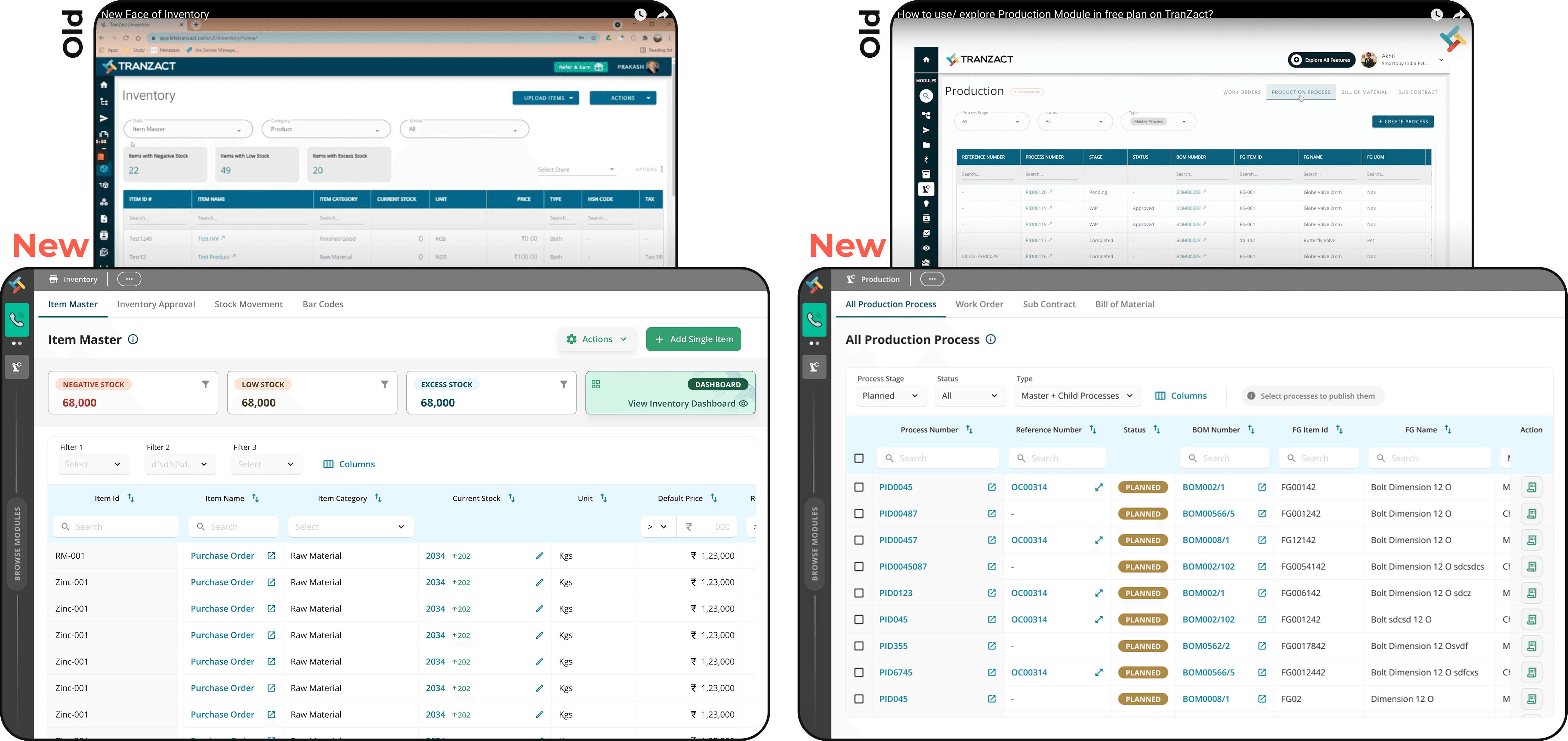
The engineering team relied heavily on pre-existing frameworks that prioritized agility over usability. As a result, the interface lacked design sensibilities, making it difficult to comprehend and increasing the time-to-value for users.
TranZact’s primary users are employees of SME manufacturers who perform repetitive operational tasks. Since many users are not particularly tech-savvy, they required significant support. They had to employ different mental models and made the interface unpredictable.
The product’s interface felt outdated, leading to hesitation and resistance among users when adopting or transitioning to the system.
Effect on the interfaces
Key Learnings
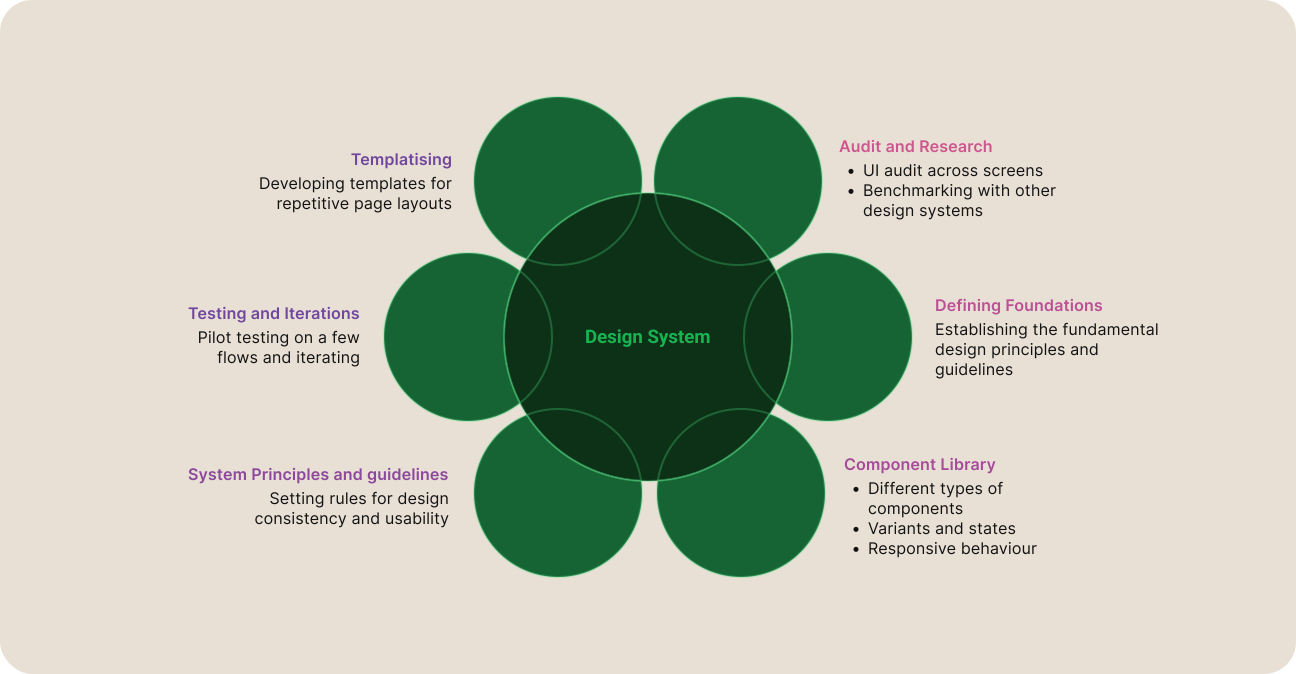
Systems Thinking: Building the design system sharpened my ability to think beyond individual screens and features, focusing instead on creating scalable, interconnected patterns that could serve the product holistically across different modules and user journeys.
Design Auditing: Conducting a comprehensive audit of the existing product helped me develop a sharper eye for identifying inconsistencies, redundancies, and user friction points — an essential step that informed the foundation of the new system.
Cross-Functional Collaboration: Collaborating closely with engineering, product management, and leadership teams taught me the importance of building alignment early, communicating system principles clearly, and balancing design ideals with technical feasibility.